 Capacity building
 Climate-smart agriculture
 Nutrition
 Value chain development
 Cereals
 Fruits and vegetables
 Oil crops
Rwanda: PROFARM: Promoting an integrated farming system around sunflower, maize and vegetables to stimulate resilient agriculture and nutrition security for smallholder farmers in Rwanda, 689,264 EUR, 2023-2027
Donor: European Commission
Partner: Rural Development Initiative
Goal
The overall objective is to ensure sufficient, sustainable food production and economic security in Rwanda by promoting an integrated farming system around sunflower, maize and vegetables to stimulate resilient agriculture and nutrition security for smallholder farmers in Rwanda.
What we do
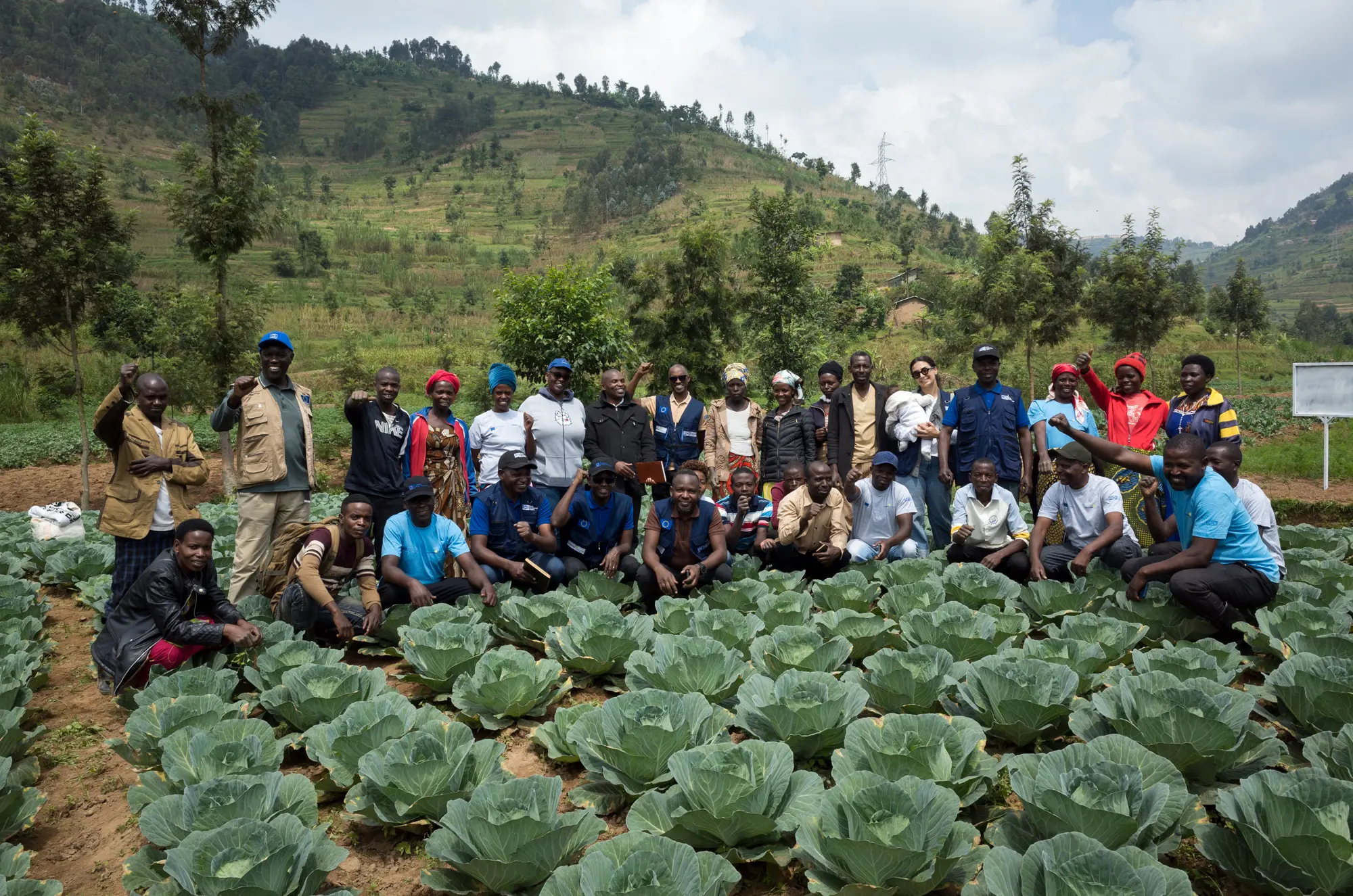
The main target groups are 60 farmers' cooperatives gathering a total of about 12,000 members producing cereals, vegetables and sunflower, including 60% women and 20% youth in three districts, Burera and Gicumbi in Northern Province and Rehang in Southern Province.
Specifically, the Action will contribute to improving local production and availability of good quality and affordable food, as well as improved nutrition and will help to increase income by linking farmers to guaranteed markets and improve the livelihoods and nutritional status of local communities.
The 42 months project will be led by EUCORD and in partnership with the Rural Development Initiative (RDI), the local co-applicant. RDI is a civil society organization created in Rwanda in 2012 to serve individuals and families in the poorest communities by creating sustainable income and livelihood opportunities by promoting innovations that create positive changes in communities, in particular for youth and women in rural communities.
Project Updates
- Yield increase of 79.2% for maize, 61% sunflower and 417% for vegetables.
- Undernourishment dropped from a baseline of 31.6% to 24.4% in 2025.
- The acceptable Food Consumption Score (FCS) rose to 84.2% in Ruhango 46% to 66% in Burera.
- Decrease of stunting levels among children under five from 41% to 37.6%, representing a 3.4 percentage point reduction.
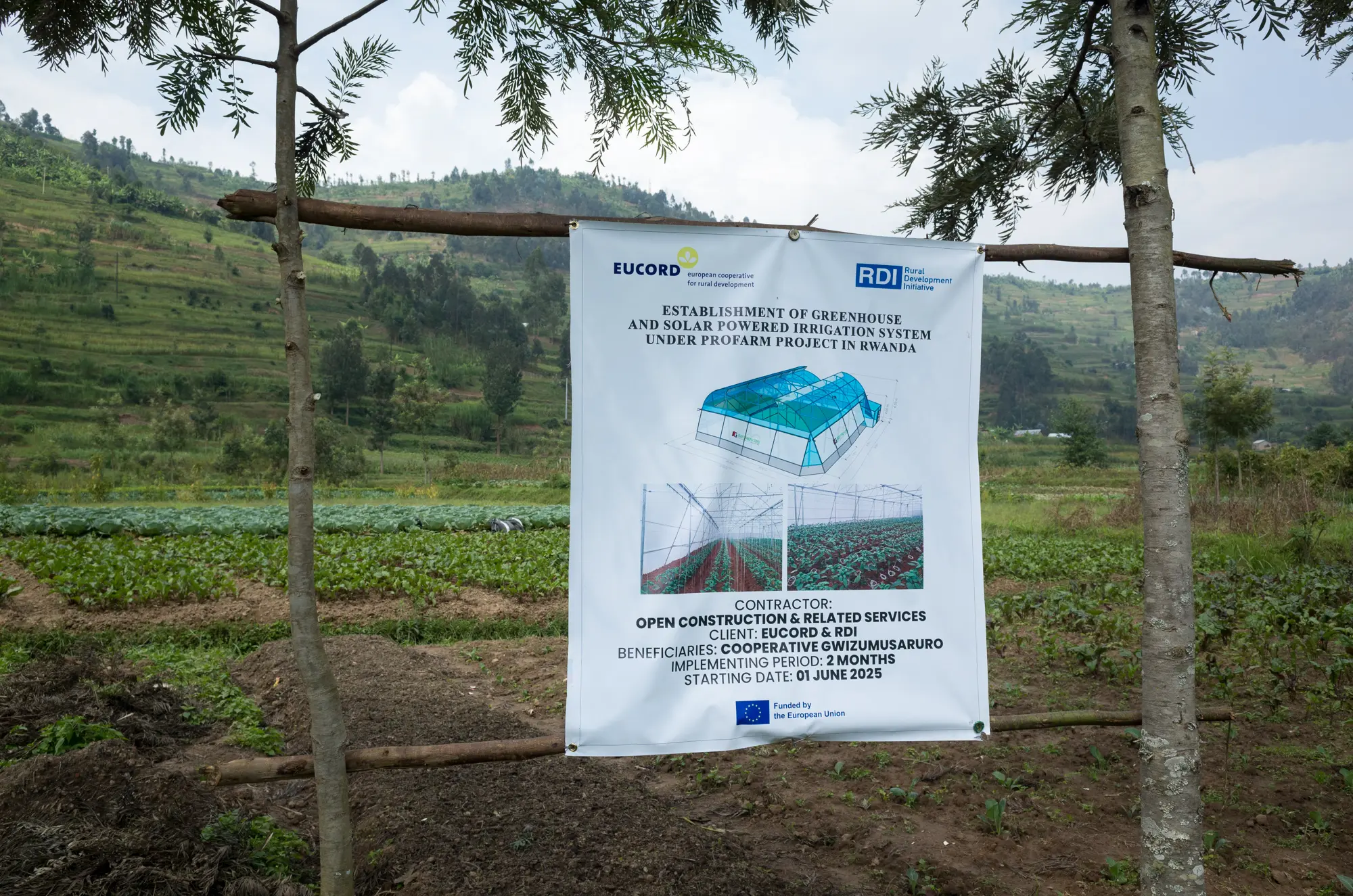
- Construction of 3 maize dryers to reduce post-harvest loss and 3 greenhouses with solar powered drip irrigation.
- A total of 11,377 farmers trained in good agricultural practices (GAP) through Farmer Field Schools (61% women and 34% youth).
- Formalization of 55 supply contracts between farmers' cooperatives and buyers of maize, sunflower and vegetables.